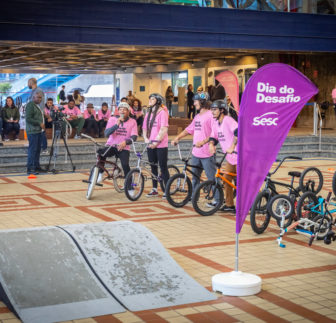
Challenge Day is a TAFISA (The Association For International Sport for All) global initiative, coordinated by Sesc São Paulo in Latin America, with the support of ISCA (International Sport and Culture Association), UNESCO (United Nations Educational, Scientific and Cultural Organization), and the Brazilian Ministry of Sport. The campaign aims to mobilize individuals, organizations, and communities in order to increase the number of people engaged in physical and sports activities.
With the theme “Sport is a Right!”, the 2026 edition reaffirms rights guaranteed by the Brazilian Federal Constitution and supported by documents such as UNESCO’s International Charter of Physical Education, Physical Activity and Sport. By deepening the understanding of this principle, the initiative seeks to raise awareness about the importance of equitable conditions for access, participation, and continuity in sports and physical activity, recognized as promoters of health and well-being.
At the same time, the project seeks to encourage debate on the role of these fields as fundamental elements for citizenship, through programs that foster dialogue and exchange among managers, specialists, partners, and communities. In doing so, it aims to contribute to the development and strengthening of policies that ensure universal access to sport and physical activity in Brazil. In this sense, Challenge Day reinforces movement as a collective achievement, built collaboratively and democratically.
May 27 • 2026
#ChallengeDay
Challenge Day 2026 reaffirms Sesc’s commitment to addressing sport and physical activity as essential dimensions of well-being, capable of strengthening bonds and identities and expanding people’s sense of belonging. The proposed actions highlight this universe as a space for connection, helping to foster values of cooperation and democratic coexistence, essential elements for the exercise of citizenship.
Furthermore, by encouraging reflections and actions aimed at integrating such practices into the daily lives of communities, the connections established through the project articulate a network of intersectoral dialogues dedicated to building environments that encourage more active lifestyle choices, in line with the values established by the institution.
Luiz Deoclecio Massaro Galina Quote - Director - Sesc São Paulo
Understanding sport and physical activity as rights means recognizing that access to movement is a relevant contemporary issue and depends on the existence of favorable conditions, adequate environments, and initiatives aimed at reducing inequalities among people and territories. In this sense, the 2026 edition of Challenge Day is presented as an invitation to collective action, mobilizing different actors to transform the right to movement into a daily, shared, and accessible practice within communities.
Carolina Seixas Quote - Physical and Sports Development Manager - Sesc São Paulo
The starting point
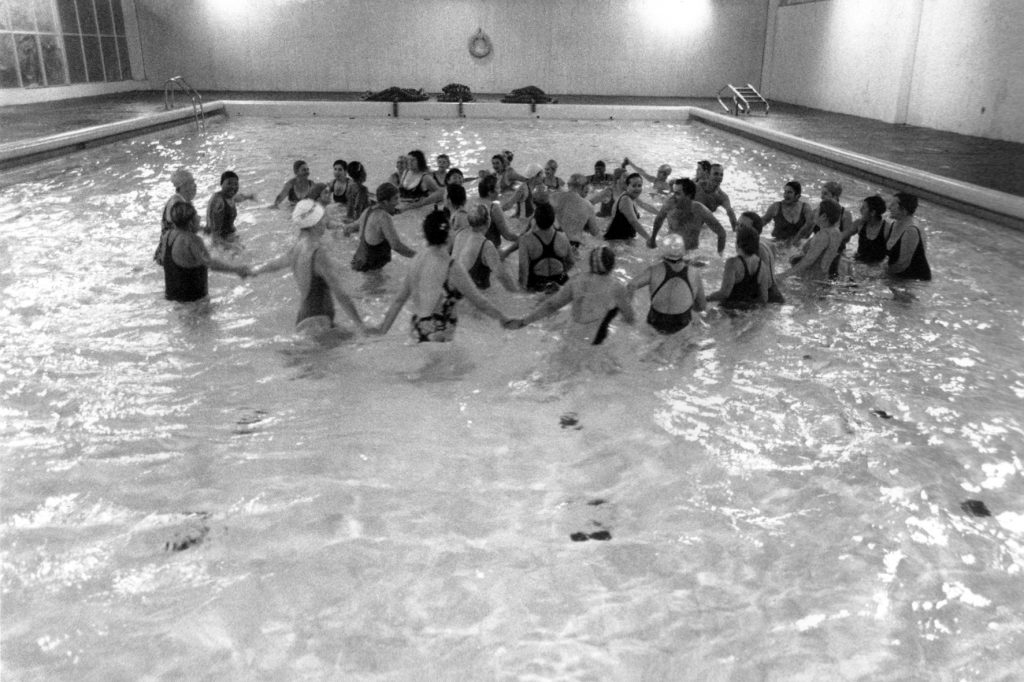
The winter of 1983 in Saskatoon, Canada, was especially cold. Thinking about the residents’ wellbeing, the mayor Clifford Wright suggested that they left their houses and went for a walk around the block. The idea was to get people active and warm while in movement. In the following year, Clifford invited the neighbor city and both made the walking at the same time. The essence of Challenge Day was created!
In 1990, TAFISA – The Association For International Sport for All– started promoting the event worldwide and gained more connections. In 1995, Sesc São Paulo begun to coordinate the activities in Brazil and a few years later in Latin America. Nowadays, Sesc São Paulo coordinates the event in the entire American Continent.
Mayor Clifford and the Saskatoon citizens could never, ever, imagine that 20 years later, Challenge Day would mobilize over 43 million people, in 3.469 cities all over Americas (data 2017)
Are you ready?
Sesc São Paulo holds the event for the first time in Brazil in partnership with The Association For International Sport for All (TAFISA). Pelé (at that time the Minister of Sport) attended the launching ceremony and the cities match-up, stating that the idea was “to incentive all Brazilians to practice sports.”
In a single phrase, the mayor of São José dos Campos – SP – Brazil expressed the essence of the event: “It is a great fun. It makes people remember that life is more than just working.”
SESC SP holds the coordination of Challenge Day in Latin America.
The campaign receives the institutional support of UNESCO (United Nations Education, Science and Culture Organization) and ISCA (International Sport and Culture Association).
SESC SP is in charge of the coordination of Challenge Day in the American Continent.
In Brazil, the National Congress receives the proposal of the law project 1300 requesting the creation of the National Challenge Day, to incentive the daily practice of physical activity and sport.
In 2011, Challenge Day reached the record of participants in all editions – 4,023 communities – and 63.611.208 persons – in the American Continent.
On April 5, Law No. 13.645/18 was enacted, establishing the National Challenge Day.
Due to the Covid-19 pandemic, Challenge Day took place entirely online. Additionally, the end of competition between cities was defined.
Goals for the triennium were defined: re-signify spaces for sports practice, train agents involved in the process, promote contact between partner institutions, establish an impact evaluation process for the project, commit partners to campaign objectives, and give visibility to projects demonstrating conceptual alignment with the campaign.